

Bitumen Emulsion is a kind of modified bitumen because of that the fine molecules of the bitumen are mixed in water by using chemical agents in this type of bitumen and the bitumen is not dissolved in water but is rather suspended in water so the chemical agents that are used in this process of mixing the fine molecules of the bitumen in water are referred to as emulsifiers.
The use of the emulsifiers ensures that the fine molecules of the bitumen are evenly distributed in the water without separating from each other. This is the reason that the application of the bitumen emulsion does not require the use of high temperatures.
Incase the other types of Bitumen in their applications needs high temperatures to be usefull, But the application of the bitumen emulsion can be used at normal temperatures. The presence of the water in the bitumen emulsion is of great benefit, as it enables easy application of the bitumen on the surface.
After application, the water goes away or evaporating, and the fine molecules of the bitumen come closer to each other, forming a continuous film of the bitumen.
This type of bitumen is made up of three primary components:
Bitumen Base
Water
Emulsifier
The emulsion Bitumen is created through the mechanical mixture of bitumen and water in the presence of emulsifying agents. This results in the bitumen being broken down into very fine particles and suspended in water.
Depending on the electrical charge of the emulsifier, bitumen emulsions are categorized into various types.
Bitumen Emulsion Classification based on breaking speed
Presently, depending on the rate at which water separates from bitumen and the emulsion breaks.
Bitumen Emulsions Are Classified Into:
RS (Rapid Setting)
Used for surface dressing and chip sealing.
MS (Medium Setting)
Used for mixing with aggregate and cold mixes.
SS (Slow Setting)
Used for Tack coats, Prime coats, and Slurry seals.
The choice of the type depends on the conditions of the project, surface, temperature, and moisture.
Applications of Bitumen Emulsion
Bitumen Emulsion is often used in various road construction and maintenance works, such as:
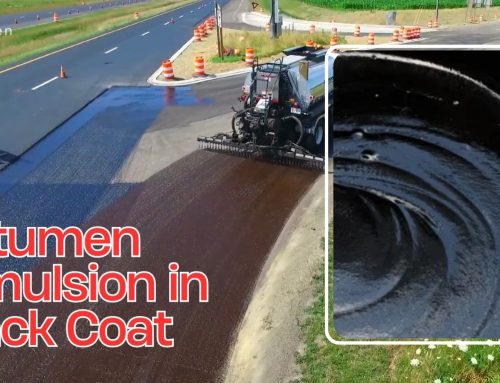
Tack Coat:
It is used to develop adhesion between the asphalt layers.
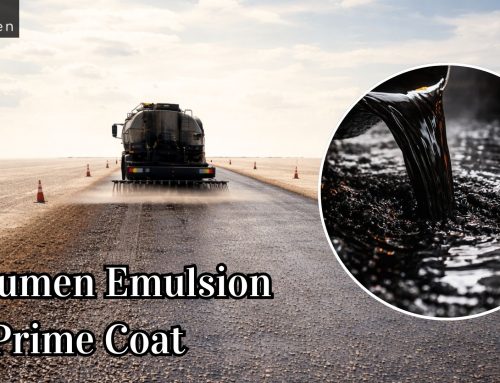
Prime Coat:
It is used to prepare and stabilize the base layers.
Cold asphalt mixtures:
It is used without the need to heat the materials.
Slurry seal and Micro surfacing:
It is used to maintain the surface of the roads.
Dust control of unpaved roads
Repair and maintenance of damaged pavement surface
Advantages of Bitumen Emulsion:
This type of bitumen no need to be heated so consuming less energy and is more safer as it cannot cause fires and Most easier to apply to damp and moist surfaces and It is more friendly to the environment, unlike hot bitumen it is easier to transport and use.
Limitations and Technical Considerations of Bitumen Emulsion
Sensitivity to weather conditions like rain and humidity and requires proper selection of emulsion type for Breaking time depends upon temperature and surface conditions and Less storage stability compared to conventional bitumen
Bitumen Emulsion in a Nutshell
Bitumen emulsion is a new and efficient technology in the construction and maintenance of roads, which replaces conventional hot bitumen in many applications so this type of bitumen saves energy, ensures greater safety, and can be applied at cold temperatures, thus playing a vital role in sustainable development.

Leave A Comment