

Prime Coat in Road Construction
In modern road construction, proper surface preparation is essential to ensure long lasting
pavement performance. One of the most important preparatory processes is the application of
Bitumen Emulsion in Prime Coat, which prepares the granular base layer before asphalt
placement. This treatment improves adhesion, stabilizes loose particles, and protects the
pavement structure from moisture damage.
Bitumen emulsion is widely used due to its ability to penetrate porous surfaces and create a
strong bond between untreated base layers and asphalt layers. Its use enhances pavement
durability, improves structural integrity, and contributes to overall road performance.
Definition of Bitumen Emulsion in Prime Coat
Bitumen Emulsion in Prime Coat refers to the application of a low viscosity bitumen emulsion
on untreated granular base surfaces before asphalt paving. This process allows the bitumen to
penetrate deeply into the base layer, filling voids and binding loose particles together.
The treatment forms a thin bituminous film that strengthens the surface and ensures proper
adhesion between the base layer and the asphalt layer above. Without this process, the bond
between layers may be weak, leading to premature pavement failure.
Bitumen emulsions such as CSS-1 and SS-1 are commonly used for this purpose due to their
excellent penetration and adhesion properties.
Main Functions and Purpose of Prime Coat Application
Bitumen Emulsion in Prime Coat performs several critical functions in pavement construction:
Surface Penetration and Binding
The emulsion penetrates the granular base layer, stabilizing loose particles and improving
structural strength.
Improved Layer Adhesion
It creates a strong bond between the base layer and asphalt layer, ensuring long term pavement
stability.
Waterproofing Protection
The bitumen film prevents water infiltration, protecting the base layer from moisture damage.
Dust Control
It reduces dust formation and improves surface cleanliness before asphalt placement.
Surface Preparation
It prepares the base layer to receive asphalt, ensuring uniform and effective bonding.
Types of Bitumen Emulsions Used for Prime Coat
Different types of bitumen emulsions are designed for specific applications:
Rapid Setting Emulsions
Rapid setting emulsions such as RS-1, RS-2, CRS-1, and CRS-2 react quickly with aggregates
and are mainly used in surface treatments and sealing applications.
Medium Setting Emulsions
These emulsions are suitable for mixing with aggregates and are widely used in cold asphalt
mixtures.
Slow Setting Emulsions
Slow setting emulsions such as CSS-1 and SS-1 are commonly used in penetration applications,
soil stabilization, and base preparation due to their excellent penetration capability.
Prime Coat Application Procedure and Method
Proper application of Bitumen Emulsion in Prime Coat requires careful preparation and
controlled conditions:
Surface Preparation
The base surface must be clean, compacted, and free from dust and loose materials.
Application Rate
Typical application rates range from 800 to 1400 grams per square meter, depending on surface
porosity.
Temperature Conditions
The emulsion is usually applied at temperatures between 40°C and 70°C to ensure proper
penetration.Curing Time
After application, the emulsion breaks and forms a bitumen film within approximately 6 hours
under suitable conditions.
Asphalt Placement
Once curing is complete, asphalt paving can proceed safely.
Technical Requirements and Application Conditions
Several environmental and operational conditions must be followed:
Ambient temperature should preferably be above 10°C
Application should be avoided during rainfall
Traffic must be restricted until curing is complete
The base layer must be properly compacted and clean
Controlled application improves penetration and performance
These conditions ensure proper bonding and long term pavement durability.
Equipment Used for Tack Coating
Specialized equipment is used to ensure proper application:
Mechanical broom for surface cleaning
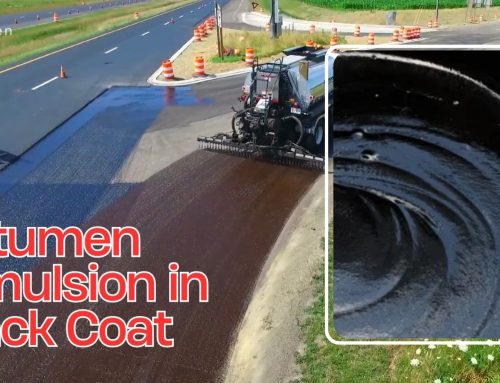
Bitumen distributor for uniform spraying
Heating system for emulsion preparation
Traffic control equipment for safety
Proper equipment ensures accurate and uniform application.
Prime Coat Applications in Road Construction
Bitumen Emulsion in Prime Coat is widely used in various pavement applications:
Highway constructionUrban road construction
Cold asphalt preparation
Soil stabilization
Pavement maintenance and rehabilitation
Surface preparation before asphalt paving
Advantages of Using Bitumen Emulsion in Prime Coat
The use of bitumen emulsion provides several important benefits:
Improves bonding between pavement layers
Enhances pavement durability and performance
Protects base layers from moisture
Stabilizes granular surfaces
Reduces dust formation
Improves structural integrity
In a Nutshell
Bitumen Emulsion in Prime Coat plays an important role in preparing base layers before asphalt
paving. By penetrating the surface, stabilizing particles, and improving adhesion, it ensures
stronger pavement performance and longer service life.
When applied under proper conditions using appropriate materials and equipment, it significantly
improves pavement durability, reduces maintenance needs, and enhances overall road quality.

Leave A Comment