

What is PMB
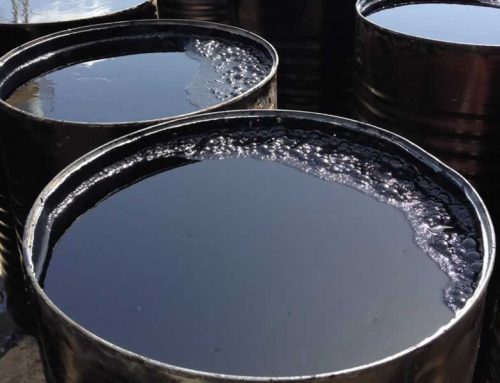
Polymer modified bitumen that is known also as PMB grade of bitumen refers to a type of modified bitumen and in this type of bitumen the polymer materials such as SBS (Styrene Butadiene Styrene), Rubber powder and certain chemical materials are added to the bitumen binder to produce a high quality of polymer grade of bitumen.
PG 82/22 demonstrates excellent performance under severe temperature conditions. The value 82 indicates the bitumen’s resistance to rutting at high temperatures, while the minus 22 value represents its ability to resist cracking at low temperatures.
Polymer Modified Bitumen for example grade (PG 82/22) is produced by modifying base bitumen with polymers and additives which has better performance in very high and very low temperatures by comparison to other PG bitumen grades.
Polymer Modified Bitumen provides higher elasticity compared to conventional bitumen and has better resistance against rutting and fatigue.
PMB shows improved resistance to deformation at high temperatures and enhanced flexibility at low temperatures. This type of bitumen provides higher elasticity compared to conventional bitumen and has better resistance against rutting and fatigue.
Due to the presence of polymers, Polymer Modified Bitumen has higher adhesion to aggregates and improved cohesion within the binder. This results in better durability and longer service life of asphalt pavements.
Polymer Modified Bitumen is especially suitable for areas with heavy traffic loads with high temperatures, and severe climatic conditions so it is widely used in highways, expressways, airports, and urban roads where performance requirements are high that means this Bitumen grade by comparison to other grades like 70/-22 and 76/16 has much better performance and be appropriate choice.
In our laboratory do performance tests for this grade and other polymer grades, based on internal and international standards.
Polymer Modified Bitumen Necessary Tests
These tests include Dynamic Shear Rheometer (DSR) tests for evaluating rutting and fatigue resistance with ESDMD standard 71/75 Bending Beam Rheometer (BBR) tests for low temperature performance with ASDMD standard 66/48.
Penetration test according to ASDMD 5
Elastic Recovery test according to ASDMD 60/84
Softening Point test according to ASDMD 36
Flash Point Test according to ASDMD 92
Conducting the viscosity test with ASDMD standard 44/02
Leave A Comment